
Views: 0 Author: Site Editor Publish Time: 2026-06-03 Origin: Site
Every fabrication shop faces a common procurement dilemma today. You must carefully balance strict capital budgets against the growing need for higher production efficiency and repeatable accuracy. Transitioning from an ordinary manual bending machine to numerical control, known as NC, marks a critical operational shift for any facility. This transition directly impacts your daily labor dependencies, average cycle times, and overall scrap rates. We wrote this comprehensive guide to provide a transparent, criteria-based breakdown of both machine types. We aim to help fabricators determine exactly which system aligns best regarding specific production volumes, part complexities, and financial boundaries. Readers will uncover the core mechanical differences between manual and numerical control architectures. You will also learn how automated precision directly reduces scrap material and simplifies new operator training. By the end, you can confidently decide whether an equipment upgrade fits your immediate business goals.
Control & Automation: Ordinary bending machines rely on manual handwheel adjustments and mechanical stops, whereas NC machines utilize digital controllers to automate the backgauge (X-axis) and ram stroke (Y-axis).
Production Efficiency: NC systems drastically reduce setup times between bends, making them viable for multi-step batch processing, while ordinary machines are best suited for single-bend, low-volume runs.
Labor Requirements: Ordinary machines require highly experienced operators to maintain consistent angles; NC equipment standardizes repeatability, lowering the barrier for operator skill.
Cost vs. ROI: While an NC hydraulic press brake requires a higher initial investment, the reduction in setup time and material waste typically accelerates the payback period for medium-to-high volume shops.
An ordinary bending machine utilizes a purely manual architecture. Operators rely heavily on physical mechanical limits to determine bending depth. You must physically adjust the machine components to set your desired angle. This process involves manually rotating handwheels to adjust the backgauge position. You read analog scales or use a measuring tape to position the metal sheet correctly. This repetitive measurement process slows down production considerably.
Furthermore, ordinary machines completely lack memory storage for part programs. Every single new job requires a full recalibration of the machine. If you finish a batch today and need to run the exact same part next week, you must start the setup process entirely from scratch. You dial in the stops, test a piece of scrap metal, measure the angle, and readjust the handwheels. This trial-and-error cycle destroys floor efficiency.
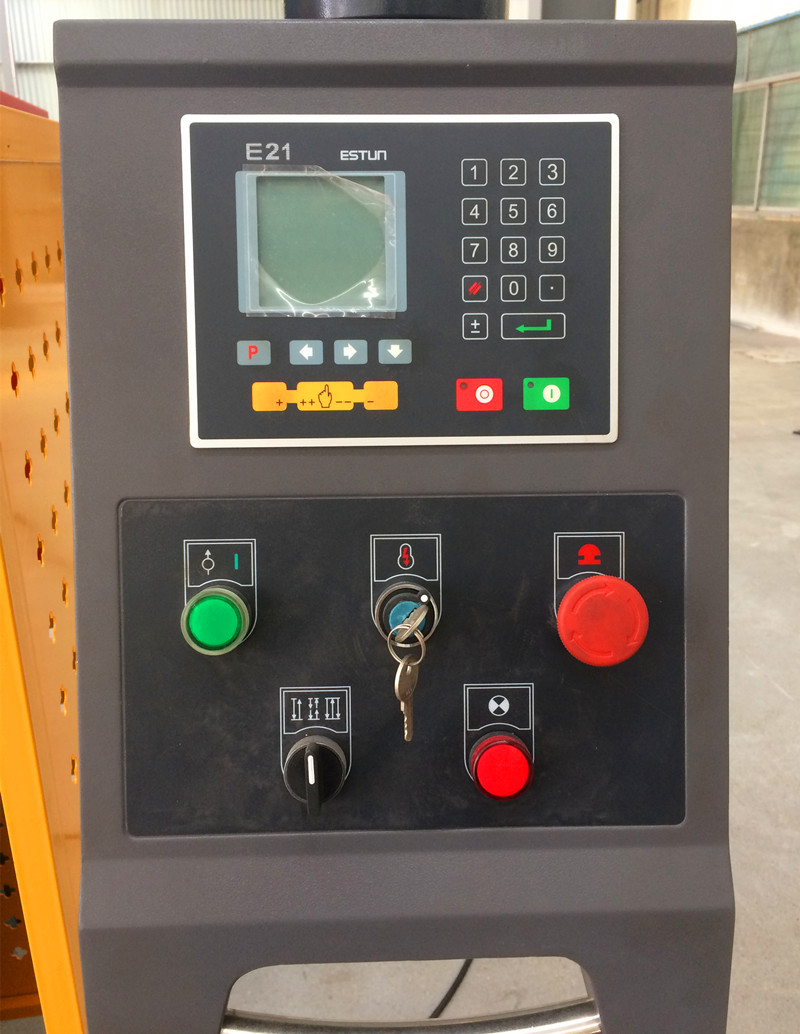
Modern automated setups use deep digital integration to solve these bottlenecks. An NC hydraulic press brake transforms the workflow completely. These advanced units feature digital NC controllers. Common industry standard controllers include the highly reliable E21 or E200 systems. The controller directly dictates the internal hydraulic valve sequencing. It controls exactly how hydraulic fluid enters the cylinders.
This automated valve sequencing ensures highly precise ram positioning along the Y-axis. The programmable memory function stands out as the most massive productivity advantage. Operators can save specific bend sequences easily. They store step parameters directly into the machine interface. You simply select a saved program from the screen. The machine then moves the backgauge automatically into the correct position. The entire setup process shrinks from minutes to mere seconds.
Accuracy constraints plague ordinary machines heavily during long production runs. Operator fatigue plays a massive role in final part quality. Manual measurement errors compound significantly over a long eight-hour shift. A worker might measure perfectly at the start of the morning. By late afternoon, minor measurement deviations begin to appear. The operator physically tires from locking and unlocking manual stops.
Maintaining exact bend angles across long workpieces proves incredibly difficult using manual systems. Ordinary setups lack automated crowning capabilities. They also lack precise ram leveling features. You often end up over-bending the outer edges while under-bending the center of the sheet. This uneven pressure creates inconsistent profiles. Operators attempt to fix this by inserting paper shims under the dies. This workaround creates massive safety risks and wastes valuable production time.
NC systems offer a profound repeatability advantage across all production volumes. Automated backgauge positioning entirely eliminates human measurement deviations. The digital controller moves the X-axis to the exact specified millimeter. It performs this movement flawlessly every single time. A standard hydraulic press brake machine typically uses linear scales or heavy-duty torsion bar synchronization. This specific technology maintains strictly parallel ram movement.
The hydraulic cylinders press down evenly across the entire sheet metal length. You achieve reliable first-part accuracy consistently. This reliability directly translates to significantly less wasted metal. Fabrication shops frequently report immediate reductions in scrap materials after upgrading their equipment. You no longer need to sacrifice three or four blank sheets just to dial in a simple ninety-degree angle.
| Metric | Ordinary Bending Machine | NC System |
|---|---|---|
| Backgauge Positioning | Manual handwheel turning | Motorized, controller-driven |
| First-Part Accuracy | Low (requires trial bending) | High (relies on saved parameters) |
| Scrap Rate | High (due to measurement drift) | Low (consistent repeatability) |
| Ram Synchronization | Basic mechanical leveling | Torsion bar or linear scale sync |
Skill gaps heavily dictate equipment procurement choices today. Ordinary machines carry a very strong "artisan" dependency. They strictly require veteran operators. These seasoned workers understand material springback intuitively. They know exactly how much extra pressure a specific gauge of aluminum needs compared to steel. Finding and retaining this specific level of talent grows increasingly difficult every year. New hires struggle constantly to produce consistent parts on manual equipment.
NC controllers standardize the entire bending process beautifully. Newer operators can execute complex multi-bend parts quickly and accurately. They simply follow a pre-programmed sequence displayed on the screen. The machine handles the complex mathematical calculations and physical positioning. Training times drop drastically. What used to take months of apprenticeship now takes mere days of basic software orientation.
Safety and ergonomic realities also diverge sharply between the two systems. Manual stops force your operators into constant physical labor. You must frequently walk around to the back of the machine. You crouch down to read small analog scales. You physically crank heavy steel wheels to move the backgauge block. This repetitive motion causes severe physical strain over time.
NC pedestals centralize all digital input intelligently. The operator stands safely in front of the primary workstation. They push buttons or touch a screen to move the heavy components. Additionally, modern NC equipment integrates standardized safety features automatically. Advanced light curtains protect the operator's hands during operation. Laser safe guards sync directly alongside the digital controller. The machine ram stops instantly if an accidental obstruction breaks the invisible safety beam.
Financial planning requires evaluating both upfront equipment costs and long-term business returns. We must carefully break down the true costs associated with each option. First, we examine the initial capital expenditure. Ordinary machines present the absolute lowest barrier to entry. They cost significantly less upfront. A basic manual folder fits into tight startup budgets very easily.
However, NC technology carries a distinct, unavoidable cost premium. You are paying directly for the digital controller interface. You are investing in robust motorized axes. You also pay for advanced hydraulic valves capable of executing precise numerical sequencing. You must view this premium as an investment in future throughput capacity rather than a simple expense.
Operating expenses and general maintenance requirements differ significantly as well. Ordinary machines feature much simpler mechanical wear parts. You grease basic gear tracks and replace worn handwheels occasionally. The maintenance remains low-tech.
An NC unit demands much stricter operational maintenance routines. You must change the hydraulic fluid and internal filters regularly to protect the sensitive valves. You occasionally need to troubleshoot electrical sensors or replace damaged cables. The routine maintenance shifts away from purely mechanical greasing toward more technical diagnostics and fluid management.
You can justify the higher initial setup cost by calculating the payback period accurately. We provide a simple framework for calculating your return based on three core savings:
Setup Time Savings: Reducing a fifteen-minute manual setup to a two-minute NC program load saves hours weekly. You multiply those saved hours by your shop's hourly burden rate.
Material Scrap Reduction: Reliable first-part accuracy means you throw away fewer expensive metal blanks. You add up the cost of raw materials saved per month.
Competitive Lead Times: Faster cycle times allow you to quote more aggressive delivery dates. You win more bids and increase your overall revenue stream.
You must align your equipment purchase with your actual shop floor reality. Let us examine the ideal use cases clearly. You should choose an ordinary machine if:
Your facility handles basic maintenance tasks or rough prototyping exclusively.
You produce very simple, one-off parts infrequently.
Production speed and rapid batch changeovers remain entirely irrelevant to your business model.
Immediate capital preservation stands as your absolute highest operational priority.
Conversely, you should invest in the upgrade if your business fits different criteria. You need an NC system if:
You operate a busy job shop handling medium-to-high volume production runs daily.
You fabricate parts demanding multiple different bends on the same workpiece. This progressive bending strictly requires automated backgauge stepping.
Your facility struggles continually to hire or retain veteran, highly skilled manual brake operators.
Caveat on Scalability: Buyers should always assess their long-term growth plans. If your required work involves complex 3D modeling, off-line programming, or extreme multi-axis precision, you face different requirements. In these highly complex scenarios, buyers should bypass NC systems entirely. You must evaluate full CNC options to handle advanced six-axis collision detection and complex crowning.
The choice between ordinary and NC machines goes far beyond reviewing your current equipment budget. It is fundamentally about aligning machine capability directly alongside your strategic business goals. Upgrading your floor equipment shifts your primary production bottleneck entirely. It moves the intense pressure away from slow machine setup times and limited operator skill availability. This operational shift enables predictable, highly manageable scalability for your fabrication shop. We highly recommend looking closely at your current production metrics today. Assess your daily scrap rates carefully. Measure your average setup times on your older manual machines. Treat this internal audit as your immediate next step before requesting any formal equipment quotes.
A: Retrofitting an ordinary machine is technically possible but we rarely recommend it. The mechanical realities present severe installation challenges. You must install motorized ballscrews, new digital sensors, and highly upgraded hydraulic valves. The labor and parts costs often approach the price of a brand-new machine. Retrofits typically suffer from frustrating electrical unreliability. Purchasing a purpose-built NC machine always guarantees better software integration and much longer operational stability.
A: NC generally controls two distinct axes. It manages the backgauge (X-axis) and the ram stroke (Y-axis) using simple numerical inputs. CNC offers comprehensive multi-axis control. It can manage up to six or more axes simultaneously. CNC systems feature robust graphical interfaces. They provide automatic bend allowance calculations and detect tooling collisions digitally before you even start the bending process.
A: Modern entry-level NC controllers are highly intuitive and user-friendly. They utilize very simple menu-driven interfaces. An operator just types in the desired bend angle and the specific flange length. The machine automatically saves these steps into its internal memory. Usually, a brand-new operator requires less than a single day of training. They can quickly learn basic step-programming and memory storage functions.


 0086 21 62828320
 0086 13817120700