
Views: 0 Author: Site Editor Publish Time: 2026-07-01 Origin: Site
Industrial metalworking machinery requires significant capital expenditure. You must carefully justify every equipment purchase to protect operating budgets. Buying the wrong machine drains financial resources and stalls production lines. Purchasing a hydraulic NC machine requires aligning specific technical capabilities. You must accurately match tonnage, bed length, and repeatability to your daily production demands. You also need to meet strict industry-level safety compliance standards.
Our objective is to transition your thinking from basic product specifications to a functional evaluation framework. We want to help procurement and engineering teams confidently assess their heavy machinery options. You will learn how to determine if an NC hydraulic system is the exact operational fit for your sector. This guide breaks down core manufacturing industries, compares control systems, and outlines actionable procurement steps.
Hydraulic NC press brakes offer the optimal balance of high-tonnage force and repeatable accuracy for industries handling thick, high-tensile materials.
While aerospace and automotive sectors demand multi-axis precision, heavy construction and energy fabrication often prioritize raw bending force and bed length.
Choosing between a standard NC and a CNC sheet metal press brake depends primarily on part complexity, batch sizes, and operator skill availability.
Acquiring a custom hydraulic press brake is justified when standard throat depths or tandem-machine configurations fail to meet proprietary manufacturing workflows.
Modern heavy manufacturing demands extreme precision and immense power. We frequently see business problems arise when facilities rely on outdated bending technology. Standard mechanical brakes lack controlled force. They struggle to bend modern high-strength alloys effectively. Fully electric models provide excellent precision. However, they struggle heavily with high-tonnage applications. You need a solution bridging this functional gap.
The hydraulic advantage directly solves these industrial challenges. Hydraulic systems apply consistent pressure throughout the entire stroke. This steady force profile reduces material spring-back significantly. Minimizing spring-back lowers scrap rates on expensive raw metals. Predictable bending behavior ensures every part meets strict quality tolerances.
Integrating numerical control introduces massive operational value. An NC sheet metal press brake bridges the gap between manual operations and complex CNC setups. They offer programmable backgauges and precise ram limits. These features guarantee reliable mid-to-high volume batch production. Operators can easily recall previous bend programs. This reduces setup times and improves daily factory throughput.
Different industrial sectors evaluate hydraulic bending machinery through unique lenses. We must examine how specific applications drive machinery adoption across core manufacturing markets.
The construction sector relies heavily on structural steel fabrications. Applications include forming massive structural beams, building facades, and heavy-duty brackets. Facilities often process thick carbon steel grades like A36 or Grade 50.
When evaluating machinery for structural steel, you must prioritize specific capabilities. This industry requires exceptionally long bed lengths. Consistent high-tonnage capability is non-negotiable for thick carbon steel. NC systems represent the ideal solution here. Structural parts usually feature relatively simple bend profiles. However, they demand high repetition and extreme durability.
Transportation fabrication environments operate under intense productivity pressures. Common applications involve bending chassis components, custom truck beds, and heavy trailer manufacturing. Facilities process combinations of aluminum and high-strength low-alloy (HSLA) steel.
You must evaluate equipment by balancing processing speed against bending repeatability. The transportation sector requires robust hydraulic systems. These machines must handle prolonged production shifts. They must operate continuously without thermal degradation of the hydraulic fluid. Overheated fluid negatively affects overall bend accuracy. High-quality oil cooling systems become critical requirements.
Energy and agriculture sectors produce massively scaled equipment. Applications include forming wind tower components, large pipeline supports, and heavy agricultural equipment housings. These parts endure extreme field conditions.
Manufacturers frequently handle abrasive or high-tensile plates like Hardox 450. You must demand completely rigid machine frames. Standard frames will flex under these immense loads. Specialized hydraulic crowning systems become necessary to prevent bed deflection. Crowning ensures the bend angle remains perfectly consistent across the entire length of heavy-duty bends.
| Industry Sector | Primary Application | Critical Machine Feature |
|---|---|---|
| Construction & Steel | Structural beams, building facades | Long bed lengths, high tonnage capacity |
| Automotive & Transport | Chassis components, truck beds | Fluid thermal management, high cycle speed |
| Energy & Agriculture | Wind towers, machinery housings | Frame rigidity, specialized active crowning |
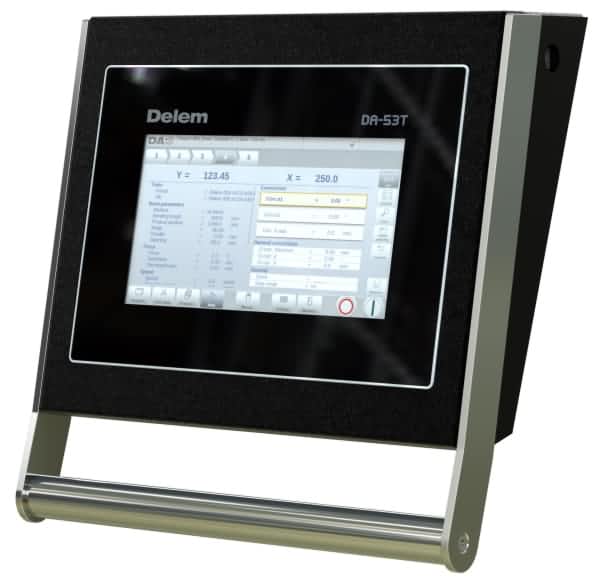
Choosing the correct control interface dictates your daily production efficiency. You must match the control system to your part complexity and workforce capabilities. We can divide this decision into distinct operational scenarios.
When to Specify an NC Control System:
Production involves simple, highly repetitive bends. Examples include basic 90-degree flanges or standard bracket shapes.
Your facility experiences high operator turnover. Simplified NC interfaces reduce initial training friction. New operators learn basic setups much faster.
Lower initial capital expenditure represents a strict budgetary requirement. NC models cost significantly less than fully automated systems.
When to Upgrade to a CNC Control System:
Sometimes, simple numerical control cannot meet modern fabrication demands. You must consider an upgrade when part geometry becomes complicated.
Production involves complex, multi-stage bending sequences on a single part. Operators cannot manually adjust the machine between every single bend efficiently.
Your engineering team requires offline 3D programming and visual simulation. Simulating bends beforehand eliminates costly collision risks.
You need automatic dynamic crowning and multi-axis backgauges. A CNC sheet metal press brake manages complex X, R, Z1, and Z2 axes simultaneously. This guarantees perfect positioning for asymmetrical parts.
Standard machinery catalogs cover most traditional manufacturing needs. However, advanced manufacturing often pushes past conventional limits. You must evaluate edge cases carefully. We justify custom builds when off-the-shelf specifications limit your proprietary production capabilities.
We can categorize customization dimensions into several key areas. Understanding these areas helps you spec the perfect machine.
Tandem Configurations:
Extreme material lengths require unique solutions. We can link two individual hydraulic press brakes together. This creates a tandem configuration. Manufacturers use tandem setups for aerospace wing spars or large shipbuilding components. You maintain the ability to operate both machines independently for smaller daily tasks. This maximizes overall floor space utility.
Throat Depth and Open Height:
Standard frame geometry sometimes restricts part manipulation. Modifying the machine frame solves this constraint. You might need to increase the throat depth to accommodate deep-box bending. Expanding the open height allows you to install specialized heavy-duty tooling setups. A custom hydraulic press brake adapts directly to your unique product shape.
ROI Reality Check:
Custom machinery demands a premium investment. You must weigh the extended lead time and premium cost of a custom build accurately. Compare these costs against your projected production savings. Custom forming often eliminates secondary welding or complex assembly processes. Reducing downstream labor costs quickly justifies the initial custom engineering premium.
Acquiring the machine represents only the first step. You must prepare your facility for actual daily implementation. Proper planning ensures a smooth operational launch.
Tooling compatibility dictates your immediate readiness. You must carefully assess your existing inventory of punches and dies. Facilities typically use European, American, or Wila/Trumpf tooling styles. Mixing tooling styles requires expensive adapters. Adapters consume valuable open height space. We recommend matching the new machine ram clamps to your dominant existing tooling style.
Safety and compliance demand absolute priority. You must evaluate all integrated safety protocols strictly. Heavy machinery poses severe risks to operators. Integrating proper safeguards prevents injuries and avoids regulatory fines.
Evaluate Light Curtains: These systems stop the ram instantly if an object breaks the optical field. They work well for straightforward bending but can hinder complex part handling.
Implement Laser Safe Guarding: Advanced point-of-operation laser systems map the area directly below the punch tip. They allow operators to hold parts safely near the tooling.
Verify Regulatory Standards: Ensure the machine meets local OSHA or CE directives. Multi-tiered safety systems must never bottleneck operator productivity.
A safe operator works faster and produces higher quality parts. Modern safety systems integrate seamlessly into the machine control software.
You now possess a functional evaluation framework. We must transition into actionable procurement steps. Start by defining your absolute constraints mathematically.
Calculate the required tonnage accurately. Base this calculation on your thickest material, shortest bend length, and desired V-die opening. Consult standard air-bending force charts. Always factor in an additional buffer to prevent running the machine at maximum capacity constantly.
Begin rigorous vendor vetting. Do not select manufacturers based solely on purchase price. Prioritize manufacturers offering verifiable MTBF (Mean Time Between Failures) data. Ensure they provide immediate domestic parts availability. You need responsive, localized service technicians ready to deploy. Machine downtime destroys profitability rapidly.
Take one final actionable step before issuing a purchase order. Request material-specific test bends from your shortlisted vendors. Supply them with your actual production material. Ask for detailed time studies. You must validate their stated accuracy and cycle times empirically. Seeing your part formed perfectly guarantees the machine matches your expectations.
Investing in a hydraulic NC press brake is never a one-size-fits-all process.
Carefully align your technical requirements with your specific industry demands to maximize ROI.
Evaluate structural rigidity, tooling compatibility, and safety compliance before making a final decision.
Let material thickness, part complexity, and facility maintenance capabilities dictate your final choice.
Choose decisively between a standard NC, an advanced CNC, or a custom-engineered solution based on empirical time studies.
A: Use an industry-standard tonnage chart or formula based on material thickness, tensile strength, bend length, and the V-die opening width. Always factor in a 20% buffer for machine longevity. Running equipment below its absolute maximum capacity preserves hydraulic seals and prevents frame deflection over time.
A: With strict adherence to fluid maintenance and regular ram calibration, industrial-grade hydraulic press brakes reliably operate for 15 to 20+ years in heavy production environments. Consistent preventative maintenance directly dictates the longevity and accuracy of the bending equipment.
A: While basic control retrofits are sometimes possible, upgrading from a standard NC to a full multi-axis CNC system is generally cost-prohibitive due to the required mechanical changes in the backgauge and hydraulic valving. You should purchase the control system that meets your 5-year production forecast.
A: Yes, modern hydraulic press brakes are heavily regulated and feature multi-tiered safety systems, including point-of-operation laser guards and dual-palm control stations, ensuring compliance with international safety directives. Proper training remains essential to maximize the effectiveness of these integrated safety technologies.


 0086 21 62828320
 0086 13817120700