
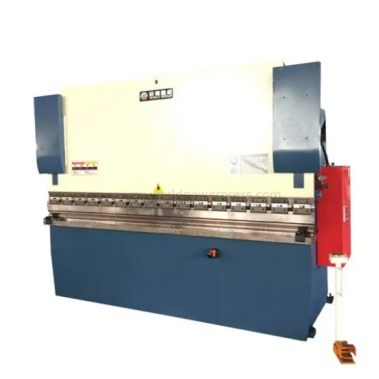
A press brake is an essential machine in metalworking used to bend sheet metal with high precision. It employs a combination of force and tooling to shape the metal into a desired angle. The machine operates by pressing a metal sheet between a punch and a die, and the ram (a part of the press brake) applies controlled vertical force to create the bend. This gradual force application ensures that the material does not crack or break, allowing for smooth and precise bends at various angles.
Press brakes are widely used across industries, including automotive, aerospace, construction, and manufacturing, to create parts and components from sheet metal. The machine can handle materials like steel, aluminum, brass, copper, and other metals, making it a versatile tool for different metalworking tasks. There are various types of press brakes, each suited to specific tasks and requirements, ranging from manual machines to advanced, high-tech automated systems. The three most common types of press brakes are manual, mechanical, and hydraulic press brakes. Each type has its own distinct characteristics, and choosing the right type depends on the desired performance, materials, and project specifications.
Manual Press Brakes: These are older models where the operator manually adjusts the machine to apply force to the metal. They are typically used for simpler, small-scale jobs where automation and precision are not as critical. While they are more affordable and straightforward to use, manual press brakes require more time and labor for each operation and may not provide the same level of precision as modern machines.
Mechanical Press Brakes: Mechanical press brakes use mechanical linkages to transmit force from the motor to the ram. This results in a more efficient and precise operation compared to manual machines. Mechanical models typically offer better speed and precision, but they can be more limited in terms of tonnage and bending capacity. These press brakes are often used for medium-sized production runs where accuracy and speed are important.
Hydraulic Press Brakes: Hydraulic press brakes are the most common type of modern press brakes, used in industries requiring high-precision bending with heavy-duty workloads. They use hydraulic cylinders to apply force, which provides greater control and consistency. The hydraulic system allows the machine to work with much higher tonnage and bending capacity compared to mechanical press brakes. Hydraulic press brakes are known for their speed, accuracy, and versatility, making them ideal for industries with large-scale, heavy-duty bending applications such as automotive manufacturing and metal fabrication.
Understanding the operation of a press brake requires a solid grasp of its components. Below are the key parts of a press brake that work together to ensure a smooth and efficient bending process:
Ram: The ram is the moving part of the press brake that applies vertical force to the sheet metal. It holds the punch, which is the tool that presses into the metal to form the bend. The ram's movement is typically controlled by either hydraulic cylinders (in hydraulic press brakes) or mechanical linkages (in mechanical press brakes). The force and movement of the ram must be precisely controlled to achieve accurate bends.
Bed: The bed is the stationary part of the press brake where the die is mounted. It provides a solid surface for the metal sheet to rest upon while the ram applies force from above. The bed and die work together to ensure that the sheet metal is correctly positioned during the bending process. The die shape determines the angle of the bend, and the bed ensures that the die remains in place during operation.
Back Gauge: The back gauge is a component that holds and positions the sheet metal as it is fed into the press brake. The back gauge can be adjusted based on the required length of the metal to be bent. The position of the back gauge is critical in ensuring that the sheet metal is aligned properly for each bend, guaranteeing uniformity across multiple parts. In CNC press brakes, the back gauge is controlled automatically for precision, while manual press brakes require the operator to adjust it manually.
CNC Controller: The CNC (Computer Numerical Control) controller is the brain of the press brake. It allows the operator to input bending parameters, such as the angle, length, and force required for each bend. The CNC system automates the bending process, providing precise control over each step of the operation. This ensures repeatability and accuracy, particularly for complex and multi-step bends. With the CNC controller, the operator can program the machine to perform specific tasks and modify settings as needed.
Tooling: Tooling consists of the punch and die. The punch is the part attached to the ram, and it applies force to the sheet metal. The die, positioned on the bed, is the counterpart to the punch. The combination of the punch and die determines the shape and angle of the bend. Tooling can be customized for different applications, including varying the punch and die to achieve different bend angles, radii, or material thicknesses. The tooling needs to be chosen carefully to match the specific material and bending requirements.
Operating a press brake involves several steps, which are typically controlled either manually or via a CNC system. Here’s an overview of how the machine operates:
Machine Setup: The first step is to prepare the machine. This involves selecting the appropriate tooling (punch and die) based on the material, thickness, and desired bend angle. The machine must also be calibrated to ensure proper alignment of the tooling and the metal sheet.
Positioning the Sheet Metal: The operator places the metal sheet onto the bed of the press brake, aligning it properly for the first bend. The back gauge helps ensure that the sheet is positioned correctly.
Programming the CNC System: For CNC-controlled machines, the operator inputs the necessary parameters, including the angle, material type, thickness, and length of the bend. The CNC system then calculates the required tonnage and force to perform the bends accurately.
Bending the Metal: Once the machine is set up and the parameters are programmed, the operator activates the press brake. The ram moves down, applying force to the punch, which presses the sheet metal into the die, creating the desired bend. The back gauge adjusts to accommodate subsequent bends, ensuring the metal remains correctly positioned.
Quality Control: After each bend, the operator may need to inspect the metal to ensure the desired bend angle and dimensions are achieved. If necessary, the machine settings are adjusted to correct any discrepancies.
Finishing: Once all the bends are completed, the sheet metal is removed from the press brake. The final part is now ready for use in further processing or assembly.
Using a press brake for sheet metal bending offers numerous benefits, including:
Precision and Accuracy: CNC-controlled press brakes ensure precise bending, which is critical for producing high-quality products. The ability to program the machine ensures that each bend is consistent and meets the required specifications.
Efficiency: Press brakes, especially hydraulic models, are fast and efficient, reducing cycle times and increasing production output.
Versatility: Press brakes can handle a variety of materials, including steel, aluminum, and brass, making them suitable for a wide range of applications.
Flexibility: With the use of different punches and dies, a press brake can perform different types of bends and accommodate different sheet metal thicknesses.
Safety: Modern press brakes come with various safety features, such as automatic sensors that prevent accidents and ensure the operator is protected during operation.
A press brake can create various types of bends depending on the tooling and settings used. Some common bending types include:
V-Bend: A standard bend where the sheet metal is pressed into a V-shaped die.
U-Bend: Similar to the V-bend, but with a curved shape.
Edge Bending: A bend along the edge of a sheet of metal, typically used for creating flanges or edges.
Z-Bend: A series of bends used to create a zig-zag shape in the metal.
Operating a press brake requires knowledge of its components, programming, and safety measures. The versatility of a hydraulic press brake makes it ideal for industries that require high-precision metal forming, offering efficiency, accuracy, and the ability to work with various materials. Whether you're producing automotive parts, metal furniture, or custom components, mastering the operation of a press brake ensures consistent and high-quality results.
www.worldpowerpress.com. provides state-of-the-art hydraulic press brakes and other machinery solutions designed to improve your production processes. For more information on how to choose the right press brake for your needs, visit www.worldpowerpress.com.
Q: What materials can be bent with a press brake?
A: Press brakes can bend a variety of materials, including steel, aluminum, copper, brass, and other metals commonly used in manufacturing.
Q: How accurate is a CNC press brake?
A: CNC press brakes offer high precision, with bends typically within a few thousandths of an inch, ensuring repeatability and consistency.
Q: What is the maximum thickness a press brake can handle?
A: The maximum thickness a press brake can handle depends on the machine’s tonnage, tooling, and material type, but typically ranges from 1/8 inch to several inches for heavy-duty machines.
Q: How do I maintain a press brake?
A: Regular maintenance includes cleaning the machine, inspecting and replacing worn tooling, lubricating moving parts, and ensuring the CNC controller is functioning properly.


 0086 21 62828320
 0086 13817120700