
Views: 0 Author: Site Editor Publish Time: 2026-03-06 Origin: Site
When considering an investment in industrial equipment, particularly for high-volume manufacturing, understanding the stamping press cost is crucial. This is not just about the initial purchase price; several factors affect the total cost of ownership and the long-term return on investment (ROI). In this article, we will break down the various cost components of a stamping press, from its initial purchase to ongoing operational costs, and offer insight into what drives the price. By understanding these elements, manufacturers can make more informed decisions that balance cost with performance, ultimately boosting productivity and efficiency.
When purchasing a stamping press, it’s important to look beyond just the sticker price. The total cost of ownership involves more than just the initial expense; factors like tooling, setup, maintenance, and energy consumption all play a significant role in the overall cost.
The initial machine cost refers to the price you pay for the stamping press itself. However, to get the full picture, you need to factor in additional costs such as:
· Tooling and Dies: These are often custom-made and can be quite expensive depending on the complexity of the parts being produced. In some cases, the tooling and die costs may even exceed the price of the press itself.
· Setup Time: The time and labor required to set up the machine for a new job or changeover can add to the overall cost.
· Maintenance: Regular maintenance is essential for keeping the press in good working condition, ensuring minimal downtime and longer lifespan.
The full stamping press cost is therefore a combination of the purchase price, tooling, maintenance, and operational expenses, all of which must be considered when making a purchase decision.
The price of a stamping press varies widely depending on its size, capabilities, and level of automation. Below is a breakdown of typical price ranges for different types of presses:
Cost Breakdown Table:
Item | Typical Cost Range (USD) | Notes |
Basic Manual/Mechanical Press | $10,000–$30,000 | Lower automation, suitable for smaller jobs |
Mid-range Hydraulic Press | $30,000–$100,000 | Balanced performance, good for medium runs |
High-end Automated Stamping Line | $150,000–$500,000+ | Includes advanced automation, PLC controls, and feeders |
Basic Manual/Mechanical Press: These presses are designed for smaller, simpler tasks and have minimal automation. They are typically used for smaller production runs where high-speed, high-volume production is not required.
Mid-range Hydraulic Press: Hydraulic presses are more versatile and suitable for medium-scale production runs. They are more efficient than manual presses and offer greater flexibility and power for a variety of tasks.
High-end Automated Stamping Line: This category includes fully automated stamping presses equipped with advanced features such as CNC or servo feeders, programmable logic controllers (PLC), and other automation systems. These presses are designed for high-volume production and complex operations, offering speed, precision, and minimal downtime.
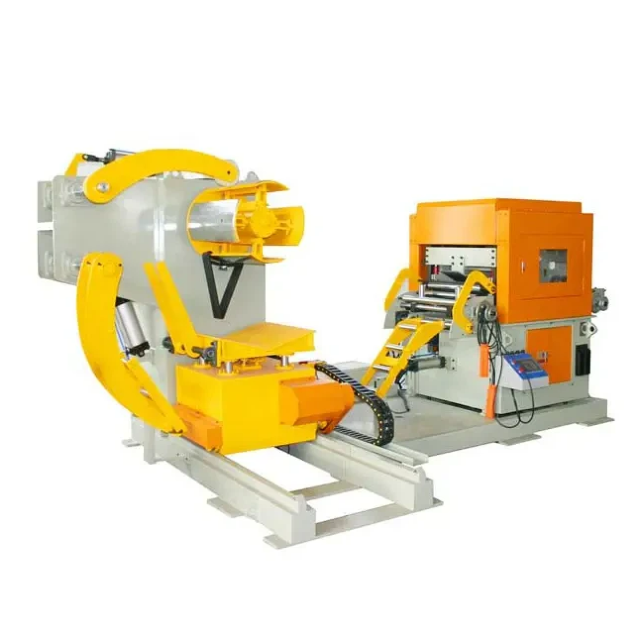
Several factors influence the stamping press cost, and understanding these elements can help manufacturers make more informed purchasing decisions.
The configuration of the stamping press plays a major role in its cost. More powerful presses capable of handling larger materials or higher tonnages will generally be more expensive. Key factors to consider include:
· Tonnage: This refers to the maximum pressure the machine can exert. Higher tonnage presses are more expensive due to the larger size and stronger components required to handle heavier loads.
· Frame Design: The structural integrity of the press's frame also impacts cost. More rigid frames offer greater stability, which is essential for high-precision tasks.
Additionally, there are different types of drives, such as servo drives and hydraulic drives. Servo drives offer greater control and energy efficiency, but they are typically more expensive than hydraulic systems.
Automated stamping presses can significantly reduce labor costs and improve efficiency, but they come at a higher price. The level of automation determines the cost:
· CNC/Servo Feeds: These systems allow for precise control of material movement and are often used in high-volume production lines. They reduce manual labor and improve efficiency, but they add to the overall cost.
· Sensors & Safety Systems: Safety systems, including sensors and emergency stop mechanisms, are essential for ensuring the safe operation of the press. These systems add to the cost but are necessary for compliance with safety standards and preventing accidents.
Tooling and die costs are often the most significant ongoing expenses when using a stamping press. Dies are often custom-designed to produce specific parts, and their complexity can drive up costs. A more complex die, capable of producing intricate shapes, may cost several thousand dollars or more. Over time, these costs can add up, especially in industries requiring frequent die changes for different parts.
Apart from the upfront cost, there are several ongoing operational costs to consider:
· Maintenance & Downtime: Regular maintenance is essential to keep the press in optimal condition. Without proper maintenance, downtime can increase, affecting production efficiency. Maintenance costs can include replacing worn-out parts, lubrication, and checking for alignment issues.
· Energy Usage: Stamping presses consume a significant amount of energy, especially during high-volume runs. The energy cost will vary depending on the machine's size, tonnage, and level of automation. More energy-efficient models will have a higher initial cost but can save on operating costs over time.
· Training & Operator Skill Premiums: Skilled operators are required to run a stamping press efficiently. Training costs can add to the total cost of ownership, especially when specialized controls and automation are involved.
When calculating the return on investment (ROI) for a stamping press, it is important to look at both the upfront investment and the long-term savings. High-volume production runs typically offer a lower unit cost due to the efficiency of automated processes. Therefore, although the initial investment may be high, the overall cost per part will decrease as production volume increases.
To calculate the ROI:
1. Unit Cost Reduction: The key to calculating ROI is how much the press reduces the cost of each part. For high-volume operations, the more efficient the press, the lower the cost per unit.
2. Payback Based on Production Volume: The higher the production volume, the quicker the machine pays for itself. This is why stamping presses are often more economical for industries with large-scale manufacturing needs, such as automotive or electronics.
Manufacturers should calculate the total cost of the press, including installation and tooling, and compare this to the expected savings in production costs over time. This will help in determining the payback period and ROI for the press.
In addition to stamping presses, other metal forming methods such as press brakes may also be used in certain applications. Below is a comparison of stamping presses and press brakes in terms of cost and capabilities.
Cost Comparison Table:
Cost Factor | Stamping Press | Press Brake (Bending) |
Upfront Cost | Medium–High | Medium |
Unit Cost (High Volume) | Low | Higher |
Tooling | High | Lower |
Setup Flexibility | Lower | Higher |
While press brakes are more flexible in terms of setup and material handling, stamping presses are better suited for high-volume production where precision and consistency are critical. The higher tooling costs for a stamping press are offset by its ability to produce parts at a much faster rate.
When considering the stamping press cost, manufacturers must weigh both the initial purchase price and the long-term operating expenses. Understanding the factors that influence the cost of a stamping press—from machine configuration to tooling and maintenance—can help businesses make informed decisions that align with their production needs and budget. Investing in high-quality, efficient stamping presses from World Precise Machinery ensures that businesses can maximize their production capabilities while minimizing costs over the long term.
For more information about our stamping presses and to get a detailed quote, please contact us today.
Q1: How much does a basic stamping press cost?
A basic manual or mechanical stamping press can cost between $10,000 to $30,000, suitable for smaller production runs.
Q2: What factors influence the cost of a stamping press?
Key factors include the machine's tonnage, automation features, tooling costs, and the type of material being stamped.
Q3: Why is tooling so expensive for a stamping press?
Tooling is often custom-made to fit specific part designs, and more complex dies can significantly increase the cost.
Q4: How can I calculate the ROI of a stamping press?
The ROI can be calculated by assessing the reduction in per-part costs, the expected production volume, and the total cost of the machine, including maintenance and tooling.


 0086 21 62828320
 0086 13817120700