
Views: 0 Author: Site Editor Publish Time: 2026-02-06 Origin: Site
A stamping press is an essential piece of equipment used in manufacturing processes to shape, cut, and form metal into parts with precision and repeatability. Whether you’re working on automotive components, electronics, or household items, metal stamping presses are vital in producing parts that meet high standards of accuracy and cost efficiency. At WORLD PRECISE MACHINERY, we specialize in delivering advanced stamping press solutions for industries looking to improve their production lines and enhance their capabilities.
In the next few minutes, you will gain a deeper understanding of what a stamping press does, the various types of operations it performs, and how it can be tailored to meet your specific needs. From the shaping of metal to the creation of complex parts, a stamping press plays a key role in many manufacturing sectors. By the end of this article, you will be able to match your production requirements to the right press machine and understand what makes WORLD PRECISE MACHINERY’s offerings unique in the industry.
A stamping press is designed to apply force to a die, which in turn shapes or cuts metal sheets into precise parts. The process uses either mechanical or hydraulic force to perform the operation, and it is widely used in manufacturing to produce high volumes of consistent, high-quality parts.
Metal forming operations, such as punching, cutting, bending, drawing, and embossing, all rely on stamping presses. These operations require precise dies and machinery to apply controlled force to metal sheets, turning them into usable parts. For example, punching and cutting operations create holes and shapes, while forming operations such as bending and drawing are used to shape the material into more complex geometries.
The main advantages of using a stamping press are repeatability, throughput, and the ability to keep cost per part low. Once set up, a stamping press can produce thousands of parts per hour, maintaining the same quality and dimensions across every unit. This repeatability is especially crucial in mass production where uniformity is paramount.
Stamping presses are capable of performing a wide range of tasks in a manufacturing setting. Depending on the requirements of the operation, a stamping press can carry out tasks such as cutting, forming, and drawing.
Cutting operations are among the most common jobs performed by a stamping press. These operations include blanking, where large sheets of metal are cut into predefined shapes, piercing, where holes are created in the metal, and trimming, where excess material is removed from the edges of a part. These operations are essential for creating the basic components that will later be further processed or assembled.
Forming operations shape metal into more complex forms without removing any material. Examples of forming operations include bending, where a sheet of metal is curved to a specific angle; flanging, where a raised edge is formed along a part; embossing, where raised designs are added to the surface; and coining, which creates detailed impressions on the metal. These operations are commonly used in industries like automotive and appliance manufacturing.
Drawing is a forming operation that turns flat metal sheets into hollow shapes like cups or shells. For example, in automotive manufacturing, metal stamping presses can create parts like car body panels or beverage cans. Stroke control is crucial in this operation to ensure the press applies force evenly throughout the stroke, preventing defects like wrinkles or thinning of the material.
The output of a stamping press can vary depending on the complexity of the operation and the materials used. However, the result is always a precise part that meets specific tolerances and surface quality standards.
A wide variety of parts are produced using stamping presses, including brackets, covers, enclosures, terminals, and various components for the automotive industry. These parts must meet stringent quality standards, which is why stamping presses are chosen for their precision and ability to produce high volumes of identical parts.
The accuracy of parts produced by a stamping press depends on several factors, including the quality of the die, the rigidity of the press frame, lubrication used during the process, and the feeding mechanism. Poor die quality can lead to defects in the parts, while a poorly maintained press frame may lead to misalignment and inconsistencies in part dimensions.
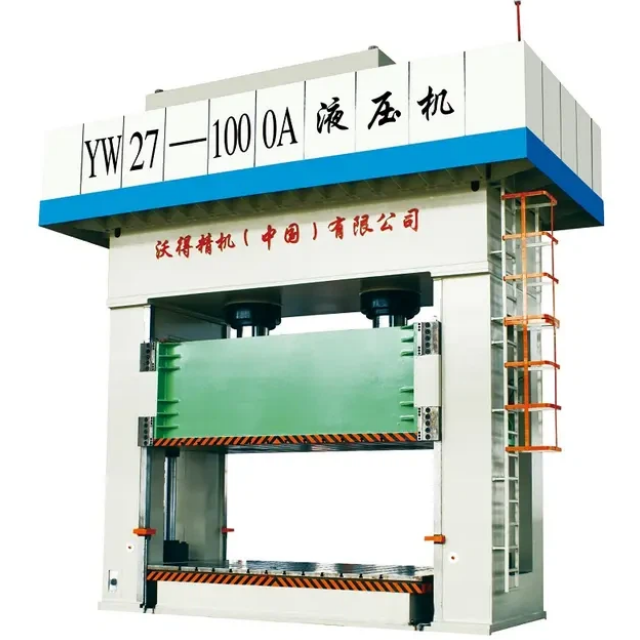
Not every job requires the use of a stamping press, and several factors must be considered when determining whether this process is suitable for your needs.
The form in which the material arrives at the factory is crucial. Coil feeding and sheet feeding differ in how material is processed during stamping. For coil-fed operations, continuous production lines can be used, making it more suitable for high-volume production, while sheet-fed presses may be used for smaller, more varied runs.
If your operation involves high-volume production runs of identical parts, a stamping press is a great choice. However, for prototypes or low-volume production, other methods may be more cost-effective. The geometry of the part is also important—if the part is highly complex, it may require specialized dies or tooling, which can increase costs.
There are three main types of dies used in stamping presses: single-hit, progressive, and transfer. Each type is suited for different production volumes and part complexities. Single-hit dies are used for simpler parts, while progressive dies allow for multiple steps in a single die, increasing efficiency for high-volume production.
At WORLD PRECISE MACHINERY, we understand that each stamping press operation has unique requirements. That's why we offer both mechanical and hydraulic presses, each suited for different applications and manufacturing needs.
Mechanical presses are known for their high-speed operations and efficiency in high-volume production. They offer quick cycle times and are ideal for applications like blanking and punching. On the other hand, hydraulic presses are better suited for operations that require more control over the force applied, such as deep drawing and forming.
The frame of a stamping press plays a crucial role in its ability to perform precise operations. C-frames are commonly used for general-purpose operations, while H-frame presses are designed to handle higher tonnage and provide more stability during heavy-duty operations.
Stamping Press Operation | What It Produces | Typical Industries | Why It’s Used |
Blanking/Piercing | Metal blanks, holes | Automotive, Electronics | High volume, precise shapes |
Bending/Flanging/Embossing | Curved, raised parts | Automotive, Appliances | Flexibility in part shape |
Deep Drawing | Hollow parts (cups) | Automotive, Beverage, Containers | High control over part dimensions |
A stamping press is an essential machine for producing metal parts efficiently and accurately. From cutting and forming to deep drawing, it can handle a wide range of operations, all while maintaining high production rates and consistent quality. Whether you’re working with metal stamping for automotive components, consumer goods, or industrial applications, selecting the right press machine can make a significant impact on your manufacturing process.
At WORLD PRECISE MACHINERY, we offer a comprehensive range of stamping press solutions, including mechanical and hydraulic presses, to help you achieve the best possible results for your production needs.
Q1: What is the difference between mechanical and hydraulic stamping presses?
A1: Mechanical presses are faster and ideal for high-volume cutting or punching, while hydraulic presses offer better control for forming operations like deep drawing.
Q2: What industries benefit from using stamping presses?
A2: Industries such as automotive, electronics, and appliances use stamping presses for manufacturing parts that require precision and high production rates.
Q3: How does a stamping press create different shapes in metal?
A3: A stamping press uses a die and controlled force to cut, form, or draw metal into a variety of shapes, including flat parts, hollow shapes, and embossed designs.
Q4: Why is the type of press frame important for my operations?
A4: The C-frame is versatile for general-purpose operations, while the H-frame provides additional stability for high-tonnage or complex forming operations, ensuring precision and performance.


 0086 21 62828320
 0086 13817120700